
Florida’s commercial buildings face some of the most demanding environmental conditions in the United States. Hurricanes, tropical storms, extreme wind uplift forces, and heavy rainfall place tremendous stress on commercial roofing systems. To protect buildings and occupants, Florida has implemented some of the strictest commercial roofing code requirements in the country.
For commercial property owners, facility managers, and real estate investors, understanding Florida commercial roofing code requirements is essential for maintaining compliance, protecting assets, and avoiding costly structural damage or insurance complications.
Whether managing a commercial office building in Miami, an industrial facility in Tampa, or a multi-family property in Orlando, ensuring your roofing system meets Florida hurricane code requirements is critical for long-term protection and regulatory compliance.
Schedule a commercial roof compliance inspection in Florida:
Request a Commercial Roof Assessment →
Why Florida Has the Strictest Commercial Roofing Codes in the U.S.
Florida’s geographic location makes it highly vulnerable to hurricanes and severe storms. These weather events generate extreme wind uplift forces capable of damaging or completely removing commercial roofing systems.
Florida roofing code requirements are designed to:
- Prevent roof system failure during hurricanes
- Reduce structural damage
- Protect building occupants
- Maintain waterproofing integrity
- Improve long-term building safety
The Florida Building Code (FBC) establishes strict requirements for commercial roofing installation, materials, and inspection.
Failure to comply with these standards can result in:
- Insurance claim denial
- Structural damage
- Safety hazards
- Expensive emergency roof repairs
Wind Uplift Resistance Requirements for Florida Commercial Roofing
Wind uplift resistance is one of the most important compliance factors for commercial roofing in Florida. During hurricanes, wind pressure can lift roofing membranes, loosen fasteners, and cause structural failure. Florida commercial roofing systems must meet strict wind uplift resistance ratings, which vary depending on building location and height.
Key Wind Resistance Requirements Include:
- Proper membrane securement
- Reinforced fasteners and attachment systems
- Edge metal reinforcement
- Structural deck integrity
- Wind-rated roofing assemblies
Commercial buildings located in High Velocity Hurricane Zones (HVHZ), including Miami-Dade and Broward County, have even stricter requirements. Professional commercial roofing installation ensures compliance with these wind resistance standards.
Approved Commercial Roofing Systems Under Florida Building Code
Florida commercial roofing code requires approved roofing systems tested for hurricane resistance.
Common compliant commercial roofing systems include:
TPO Commercial Roofing
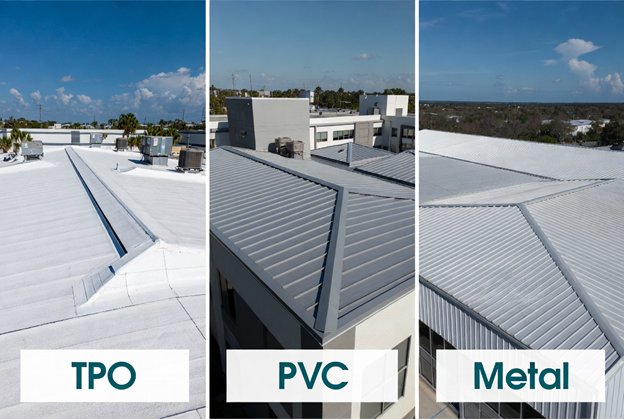
TPO roofing is widely used in Florida due to its strong performance and heat-welded seams.
Benefits include:
- Excellent wind resistance
- Strong waterproofing performance
- Energy efficiency
- Cost-effective installation
PVC Commercial Roofing
PVC roofing offers exceptional durability in hurricane-prone environments.
Benefits include:
- Superior seam strength
- Excellent moisture resistance
- Strong wind uplift performance
- Long-term durability
PVC is commonly used on commercial buildings requiring high-performance roofing systems.
Metal Commercial Roofing
Metal roofing provides outstanding wind resistance and durability.
Benefits include:
- Exceptional wind uplift resistance
- Long lifespan
- Excellent structural strength
- Minimal maintenance requirements
Metal roofing systems are often used on large industrial and commercial buildings.
Commercial Roof Drainage Requirements Under Florida Code
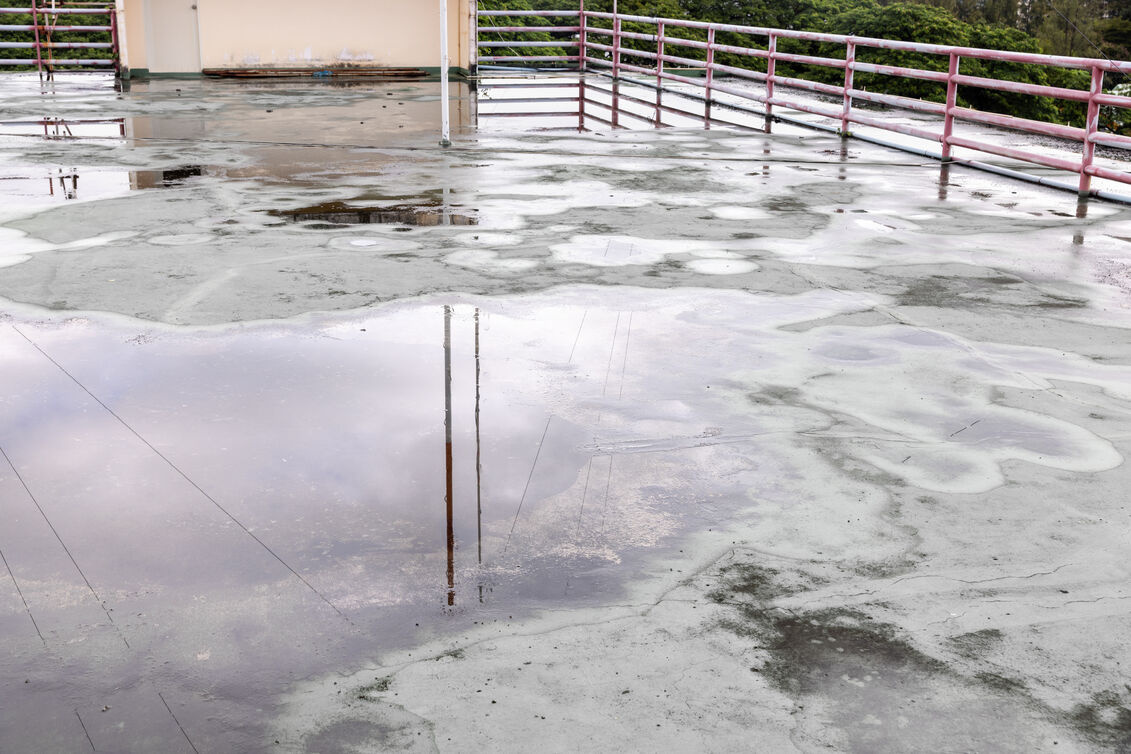
Florida’s heavy rainfall makes drainage performance critical. Commercial roofing systems must provide adequate drainage to prevent standing water.
Drainage requirements include:
- Proper roof slope design
- Functional drainage systems
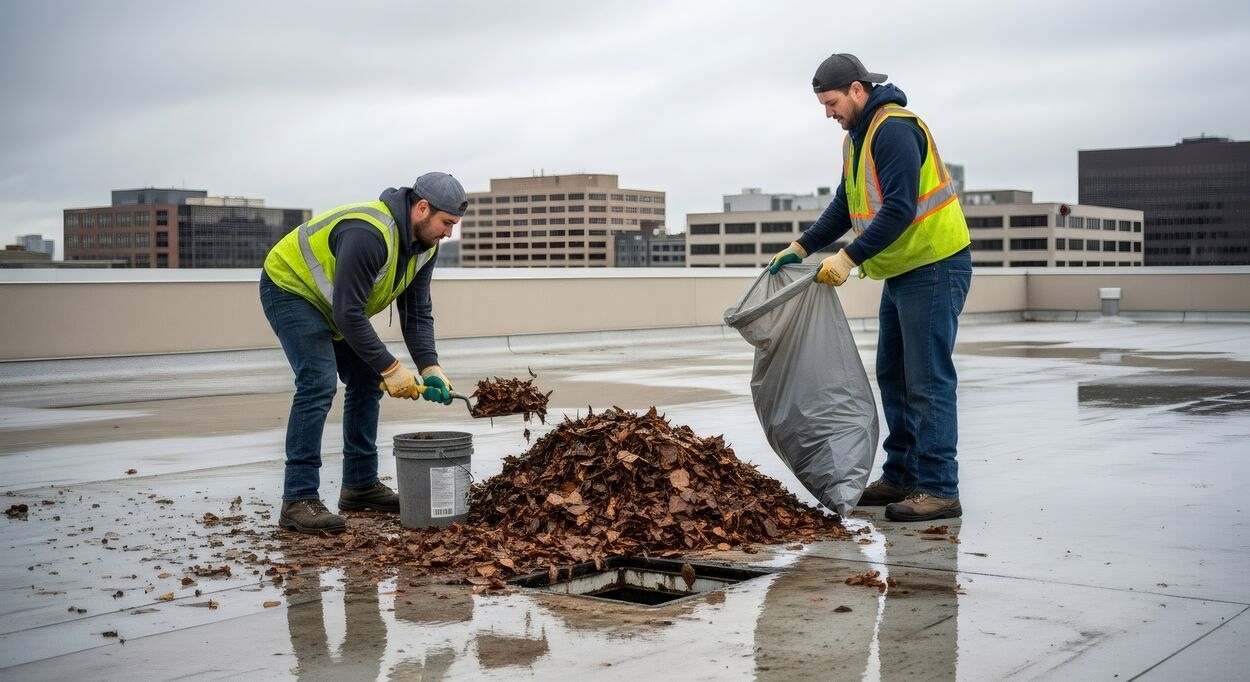
- Clear drains and scuppers
- Proper waterproofing
Poor drainage increases leak risk and structural damage. Professional inspection ensures drainage compliance.
Florida Commercial Roofing Inspection Requirements
Commercial roofs in Florida must be inspected regularly to maintain compliance and ensure storm readiness.
Recommended Inspection Frequency
Commercial roofs should be inspected:
- Twice per year (spring and fall)
- Before hurricane season
- After major storms or hurricanes
Regular inspections help identify vulnerabilities before storm damage occurs.
What Property Managers Can Monitor Internally
Property managers and maintenance teams should routinely check for:
- Loose flashing or edge metal
- Drainage blockage
- Membrane damage
- Rooftop debris
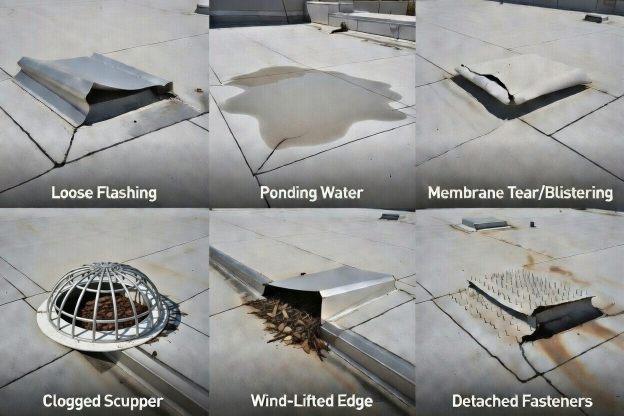
These routine checks help detect early warning signs.
What Requires Professional Commercial Roofing Inspection
Professional roofing contractors should perform:
- Wind uplift resistance assessments
- Membrane securement inspections
- Structural integrity inspections
- Leak detection
Professional inspections ensure compliance and storm readiness.
Insurance Compliance and Commercial Roofing in Florida
Insurance companies require commercial roofing systems to meet Florida code standards.
Non-compliant roofing systems may result in:
- Claim denial
- Higher insurance premiums
- Reduced coverage
Maintaining code-compliant roofing systems protects your investment. Professional inspection documentation helps support insurance compliance.
Signs Your Commercial Roof May Not Meet Florida Hurricane Code Requirements
Common warning signs include:
- Loose or detached roofing materials
- Visible membrane movement
- Roof leaks
- Loose flashing
- Poor drainage performance
These issues indicate potential compliance risks. Professional inspection is recommended immediately if these signs are present.
How to Ensure Your Commercial Roof Meets Florida Code Requirements
Maintaining compliance requires proactive planning.
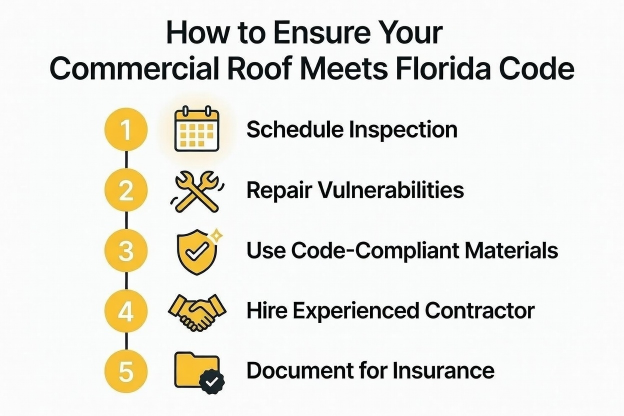
Recommended steps include:
- Schedule regular professional inspections
- Repair vulnerabilities promptly
- Use code-compliant roofing materials
- Work with experienced commercial roofing contractors
Professional roofing companies ensure proper installation and compliance.
Why Partner with Solameer for Commercial Roofing in Florida
Solameer specializes in commercial roofing systems designed to meet Florida’s strict building code requirements and hurricane resistance standards.
Our services include:
- Commercial roof compliance inspections
- Commercial roof repair Florida
- Commercial roof replacement Florida
- Preventative maintenance programs
- Storm damage repair
- Code-compliant roofing installation
We help commercial property owners protect their buildings and maintain full code compliance.
Request your commercial roofing consultation today:
FAQs: Florida Commercial Roofing Code Requirements
What wind rating is required for commercial roofs in Florida?
Wind rating requirements vary depending on location, but buildings must meet Florida Building Code wind uplift resistance standards.
How often should commercial roofs be inspected in Florida?
Commercial roofs should be inspected twice annually and after major storms.
What roofing systems perform best in Florida hurricanes?
Metal, PVC, and reinforced TPO roofing systems provide excellent hurricane resistance.
Are commercial roof inspections required for insurance compliance?
Yes. Insurance companies often require inspections to verify compliance.
What happens if my commercial roof does not meet Florida code?
Non-compliant roofs may experience structural failure, insurance claim denial, and increased repair costs.



.jpeg)